
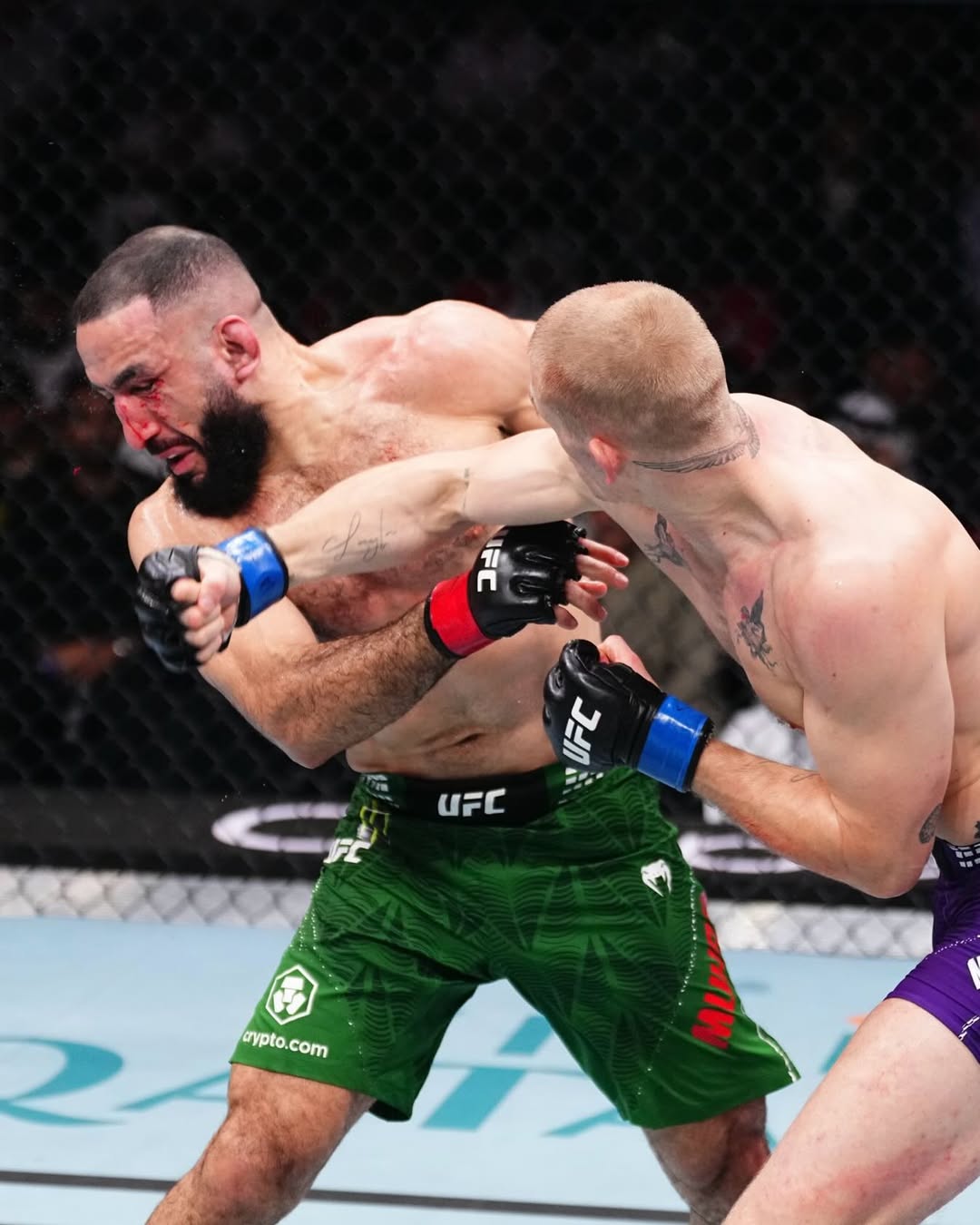
Combattant contre lutteur : cette rivalité existe-t-elle encore dans le MMA moderne, ou est-ce un mythe ?
Pendant des années, le MMA a été présenté comme un simple affrontement de styles :
attaquant contre lutteur .
Les boxeurs et kickboxeurs d'élite s'efforçaient de maintenir le combat debout, tandis que les lutteurs cherchaient sans relâche à amener le combat au sol. C'était facile à comprendre, facile à promouvoir et souvent exact.
Mais ce sport a évolué.
Aujourd'hui, la vraie question est inévitable : l'opposition entre frappeur et lutteur existe-t-elle encore dans le MMA moderne, ou n'est-elle devenue qu'un argument marketing ?
Comment est né le récit du « frappeur contre le lutteur »
Aux débuts du MMA, les styles étaient clairement distincts :
-
Les attaquants ont dominé le jeu au pied
-
Les lutteurs contrôlaient le terrain
L'entraînement croisé était limité. Les combattants avaient rarement des solutions en dehors de leur zone de confort. Celui qui parvenait à imposer son style de combat l'emportait généralement.
Cette réalité a donné lieu à des affrontements légendaires et a bâti l'un des récits les plus marquants de l'histoire des sports de combat.
Le tournant : le moment où le MMA a cessé d'être une confrontation de styles
Avec la maturation du MMA, l'entraînement a évolué.
Les combattants ont cessé de se préparer pour une seule phase du combat et ont commencé à se préparer pour toutes . Les salles de sport ont intégré la lutte, les frappes, le travail au corps à corps, le contrôle du mur et le conditionnement physique dans un seul système.
Le résultat ?
Le MMA a cessé d'opposer un frappeur à un lutteur — et est devenu un combat entre combattants .
MMA moderne : contrôler le lieu du combat
Dans le MMA d'aujourd'hui, le plus grand avantage n'est ni la frappe ni la lutte, mais le contrôle .
Les combattants d'élite peuvent :
-
Défendez les tentatives de projection lorsqu'ils veulent frapper.
-
Sécurisez les mises au sol lorsqu'ils perçoivent un avantage.
-
Utilisez les menaces de lutte pour créer des opportunités de frappe
La lutte n'est plus seulement un moyen de gagner, c'est une arme stratégique .
Pourquoi la lutte reste le langage universel du MMA
Même si les frappes atteignent leur plus haut niveau jamais vu, la lutte reste le fondement car elle :
-
Dicte le rythme
-
Positionnement des commandes
-
Épuise les adversaires physiquement et mentalement
-
Neutralise les attaquants dangereux
Les combattants qui ne comprennent pas la lutte finissent par devenir les otages du jeu de leur adversaire .
C’est pourquoi la plupart des champions modernes — même ceux connus pour leurs frappes — possèdent de solides bases en lutte.
La fin du « pur attaquant »
Un attaquant qui :
-
Impossible de défendre les takedowns
-
Ne comprend pas le travail en cage
-
Évite les échanges au corps à corps
Je ne peux tout simplement plus survivre au niveau de l'élite .
Les attaquants modernes doivent :
-
Menacer avec la puissance des pieds
-
Se défendre et échapper aux mises au sol
-
Savoir quand accepter le terrain — et quand ne pas le faire
La grève reste essentielle, mais à elle seule, elle ne suffit plus.
Même les lutteurs purs atteignent leurs limites.
La même évolution s'applique aux lutteurs.
Un combattant qui :
-
Les tirs sont prévisibles
-
Manque de configurations d'attaque
-
Repose uniquement sur le physique
sera finalement révélé.
Les lutteurs modernes doivent :
-
Grève pour créer des entrées
-
Utilisez les feintes et le timing.
-
Mélangez les prises avec des combinaisons
Sans cet équilibre, même la lutte d'élite perd de son efficacité.
Alors… le combat entre un attaquant et un lutteur existe-t-il encore ?
Techniquement parlant ? Non.
Du point de vue narratif ? Oui.
La rivalité persiste :
-
Vendre des combats
-
Pour simplifier la narration pour les fans
-
Pour susciter l'anticipation
Mais dans l'octogone, les victoires appartiennent aux combattants qui savent mieux combiner les styles , et non aux spécialistes.
Le nouveau profil du combattant d'élite
Les meilleurs combattants d'aujourd'hui sont :
-
Hybride
-
Adaptable
-
Intelligent
-
Stratégiquement complet
Ils ne choisissent pas d'être des attaquants ou des lutteurs.
Ils choisissent de gagner .
Ce que cela signifie pour les personnes qui s'entraînent
Si votre parcours est :
-
Muay Thai
-
Boxe
-
Kickboxing
👉 Apprendre la lutte ne nuira pas à vos frappes — cela les améliorera .
Et si vous venez du monde de la lutte :
👉 Développer des techniques de frappe n'est plus une option, c'est une question de survie.
Le débat entre frappeurs et lutteurs ne définit plus le MMA moderne.
Ce sport a évolué en un jeu où les gagnants sont ceux qui :
-
Comprendre chaque phase
-
Dissimuler leurs intentions
-
Contrôler le rythme et l'espace
-
Décidez où se déroule le combat.
Au final, le véritable adversaire n'est pas le style de l'autre combattant, mais votre incapacité à vous adapter .
💬 Pensez-vous que de véritables « purs frappeurs » existent encore au plus haut niveau du MMA ?
🦈 Entraînement terminé : découvrez notre équipement de Muay Thai et de MMA en provenance du Brésil.
📩 Suivez notre blog pour des analyses de combat plus techniques et pertinentes.
